Nicolas Wagner
Specialist in the economics, regulation and financing of transport infrastructure nicolas.wagner@gmail.com
Experience
Director of sector regulation
Leading a 15-person directorate organised in three teams and responsible for the economic, financial and competition analysis of the motorway sector and intercity road passenger transport. Led the Authority’s work on the economics of motorway concessions, including financial monitoring of 21 concession companies and the assessment of amendments to concession contracts. Also led multidisciplinary work on the reform of the regulatory framework for airport concessions.
Head of the Empirical Policy Analysis team
Led a team of four economists producing strategic analysis and policy recommendations for member countries. Managed research programmes for governments and international organisations on road pricing, accessibility and strategic infrastructure investment.
Head of the Economic Appraisal Team
Led a team of four engineers covering transport, energy and environmental economics. Advised ministerial cabinets on public policy design, including the French heavy-goods vehicle eco-tax, and contributed to the national framework for socio-economic appraisal of infrastructure investment.
Head of the Planning and Foresight team
Led a team of 16 professionals working on transport, spatial planning and climate policy. Provided project-owner assistance for major infrastructure projects, including the A63 and A412 motorways, and supported public consultation and territorial planning processes.
Junior researcher
Produced research work on a wide range of subjects including transport economics, operational research and modeling
Software engineer
Software development in C++
Education
PhD in economics
Dynamic equilibrium on a transport network (For more details, see the dissertation)
Master of science in transport
Courses in transport economics and policies
Diplôme d'ingénieur
Engineering degree, with a specialisation in economics and finance
Lycée du Parc
Intensive course in Mathematics, Physics and Chemistry
Skills
- Transport Infrastructure Economics and Finance
- Economic Regulation and Concessions
- Public Policy and Socio-economic Appraisal
- Corporate Finance and Financial Modelling
- Leadership of Multidisciplinary Teams
- Stakeholder Engagement and Institutional Negotiation
- Fluent in English and French
- Basic Russian
- Proficiency in R (most standard packages, including tidyverse) and Python (NumPy, SciPy, Scikit-learn)
- C++ (STL, Boost, Qt)
- PostgreSQL/PostGIS
Projects
Selected projects conducted throughout my career.
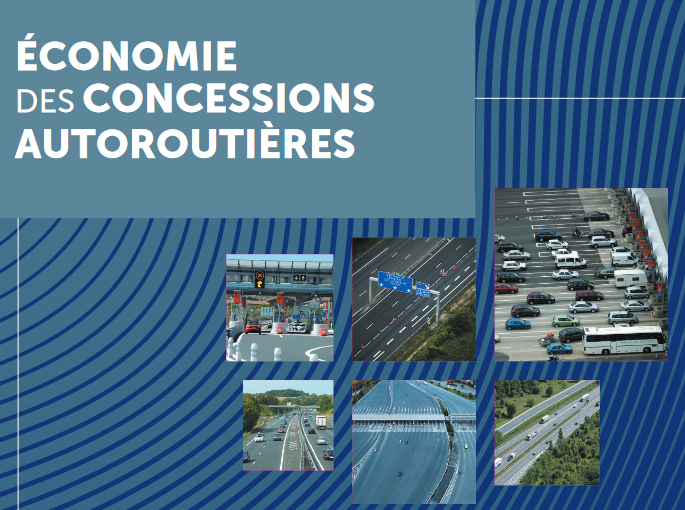
The economics of motorway concessions in France
In my current position, I have led several analyses on motorway concessions, focusing on the relevance of the French model, its areas for improvement, and its profitability.
Some of our findings are presented in the two reports published in 2020 (download here) and 2023 (download here).
The Decarbonising Transport initiative
The Decarbonising Transport initiative promotes carbon-neutral mobility to help stop climate change. It provides decision makers with tools to select CO2 mitigation measures that deliver on their climate commitments. At the OECD, I was involved in several projects within the decarbonising Transport initiative. For example:
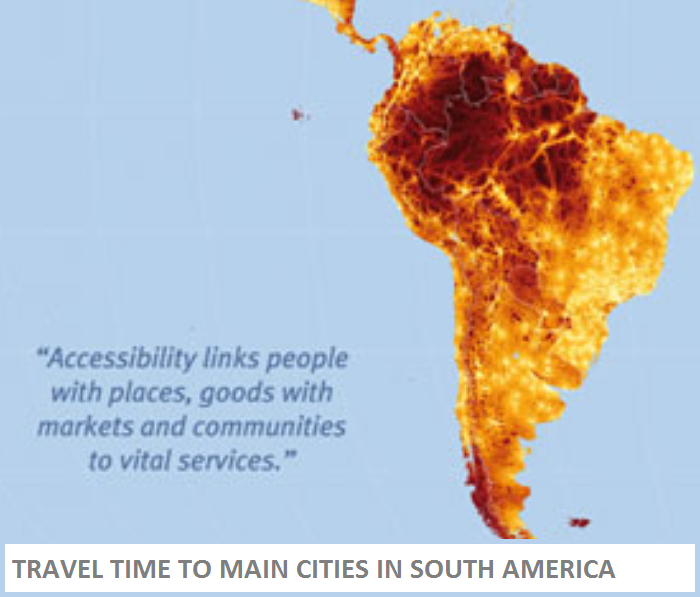
Accessibility measurements (2017-2018)
Spatial accessibility relates to how, and how well, people access to jobs and services. Urban accessibility has become an increasingly important focus of transport planning. I built the ITF urban accessibility platform, a set of databases and computational scripts used to produce accessibility measurements for all cities of the world.
Download the final report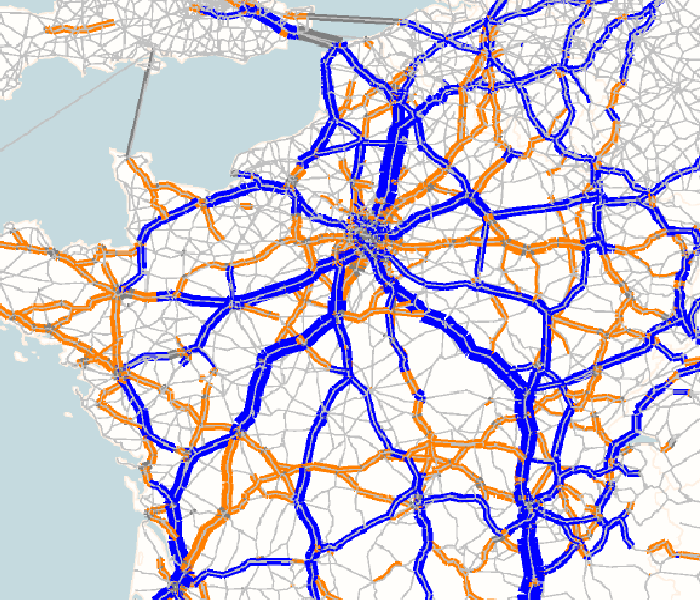
National low carbon strategy (2014 - 2016)
I was a key member of the team in charge of the 2015–2020 National Low-Carbon Strategy (NLCS). Among other things, I worked actively on the transport scenario and conducted a long-term demand forecast. The results are currently still used as a reference for transport policy appraisal by the ministry in charge of transport.
Download the report on long term transport demand forecast
I also supervised an appraisal of the macroeconomic effects of the NLCS using a CGE model.
Socio-economic assessments of transport policies (2013 - 2016)
While working in the central administration of the ministry in charge of transport, I conducted several socio-economic assessments. In particular:
- On "Trains d'équilibre du territoire" (available on request)
- On policies supporting cycling
- On long distance coaches
I also served on the scientific committee for the national guidelines on the socio-economic appraisal of transport investments.
Residential economy (2010-2013)
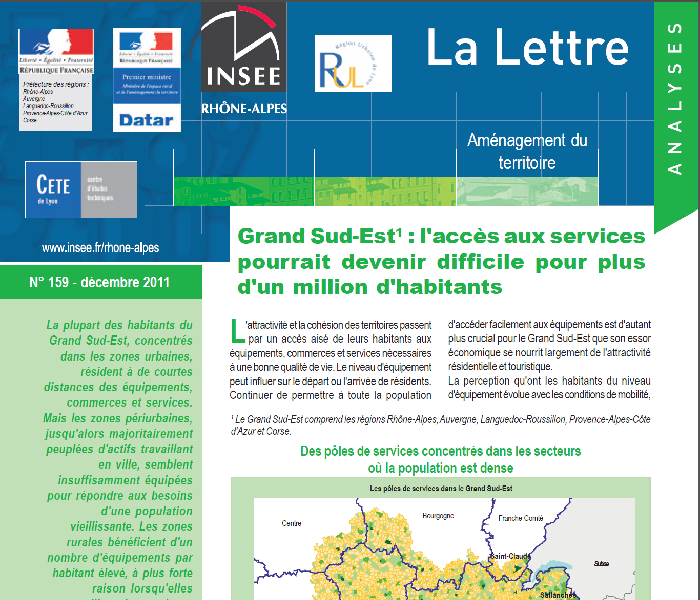
Based on the theoretical framework developed by Laurent Davezies, this study deals with the consequences of an increase in transport costs for the residential economy in South East France. We produced 4 publications:
- Mobility patterns in South East France
- Access to services in South East France
- Territorial vulnerability in South East France
- Zoom on a specific area
Additionally, I authored a methodological report that was used to replicate the study in four other parts of France.

Assessing transport policies in the Vallée du Rhône (2011 - 2012)
In 2006, a national debate on widening the heavily congested highways of the Vallée du Rhône took place. It resulted in the creation of an observatory of the transport activities. I was in charge of defining the observatory and producing its first assessment report, covering the 2006 to 2012 period. In this context, I led a team of four engineers and a designer.
Local authority assistance for sustainable mobility plans (2010 - 2013)
I conducted several assignments for local authorities, usually focused on specific technical topics within larger planning projects. For instance, I provided technical assistance for:
- the development of the multimodal transport model for the Geneva urban area (as part of a french-swiss cooperation).
- the sustainable mobility plan for the Grésivaudan area near Grenoble.
I also contributed to a methodological note on the appraisal of urban mobility plans : "L'évaluation des PDU : des convergences d'approches pour une réalité complexe"
Large scale transport surveys (2010 - 2013)
While working at CETE de Lyon (now Cerema), I led several large-scale transport surveys. In particular, I conducted a survey of more than 10,000 households for the Rhône-Alpes region. I was also responsible for the main statistical components, including survey design and reweighting using calibration on margins.
Download summary report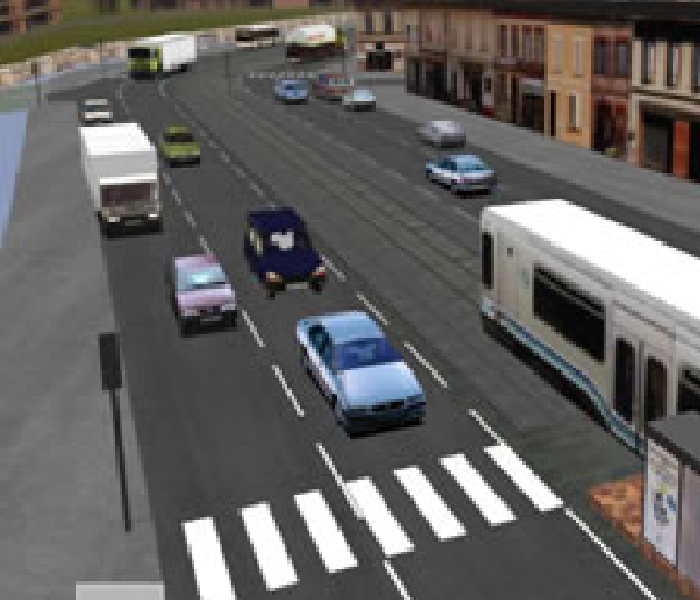
Development of a traffic microsimulator for Renault (2004 - 2005)
Renault has long developed driving simulators for vehicle development and research activities. I spent one year in Renault’s driving simulator and virtual reality department, developing the traffic simulation module of SCANeR© II, the in-house driving simulator tool. I investigated state-of-the-art modeling techniques, in particular Bayesian networks approaches, and implemented them in the software.